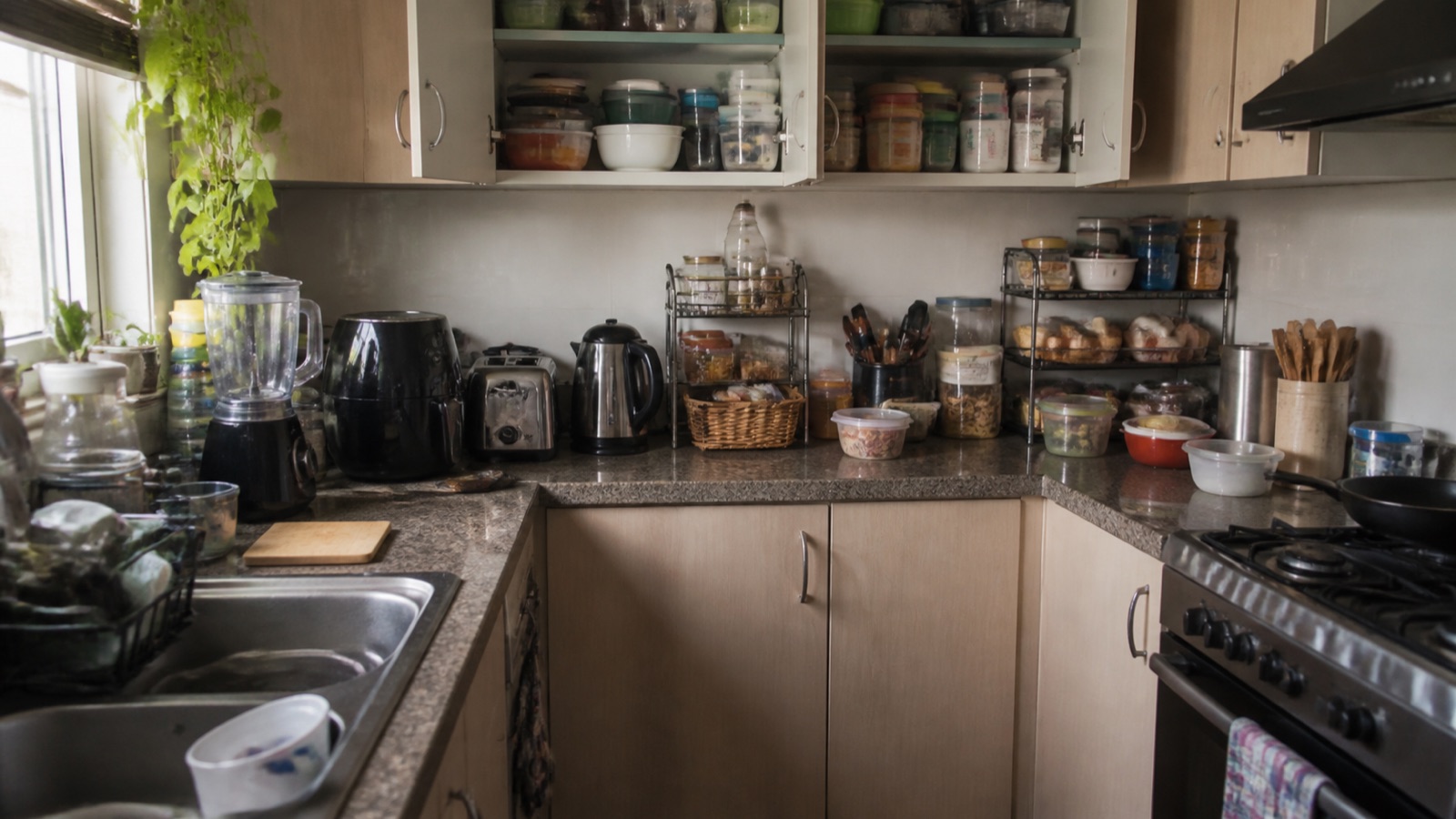
If you've organized your small kitchen twice and it still doesn't work, you probably didn't fail at effort. You made one of a handful of mistakes that every "genius small kitchen hack" list quietly encourages, like buying the bins first or filling every inch of wall. Those lists are written for photographs; a working kitchen has different rules.
Each mistake below comes with the fix and, just as important, when the fix doesn't apply, because the wrong fix is how people end up organizing a third time. They follow the same order as our step-by-step small kitchen organizing system: declutter, zone, then buy.
Mistake 1: Buying organizers before decluttering
The most expensive mistake and the most common. You buy bins for what you own, organize it beautifully, and a month later you're still short on space because you organized things you never use. Retailers love this mistake; your cabinets don't.
The fix: work through the kitchen declutter checklist first, one zone per evening. Only measure for organizers once each cabinet holds what's staying. People who follow that order consistently report buying fewer than half the products they'd originally listed.
When it doesn't apply: if you've just moved and own very little, skip ahead; there's nothing to declutter yet, and you're better off zoning the empty kitchen before boxes get unpacked into the wrong cabinets.
Mistake 2: Ignoring the air above every stack
Open any small-kitchen cabinet and there's usually 8 to 12 inches of empty space above the plates and bowls. That's a whole second shelf per cabinet going unused while the counter overflows.
The fix: add a shelf riser to each cabinet with more than about 10 inches of clearance, putting daily items on top and less-used items below. The best shelf risers roundup compares expandable and fixed models; expandable ones fit most widths but sag under heavy stacks, so put cast iron on the cabinet floor, not on the riser.
When it doesn't apply: cabinets with adjustable shelves. Move the shelf pins first; it's free and sturdier than any riser.
Mistake 3: A drawer full of mismatched containers
Six brands of containers means six lid shapes, and nothing stacks. The cabinet holds a third of what it could, and you spend two minutes finding a lid every time you pack lunch.
The fix: match every container to its lid, recycle the orphans, then replace the survivors with one system whose lids nest and bases stack. The best stackable containers guide explains the trade-offs: glass is heavier but doesn't stain, plastic is lighter but tends to need replacing every couple of years.
When it doesn't apply: if you have a dedicated deep drawer for containers, mixed sets are manageable with a lid organizer, and replacing everything is money you could spend on a bigger problem.
Mistake 4: Treating the counter as storage
The toaster, the air fryer, the knife block, the fruit bowl, the drying rack, the utensil crock. Each one is reasonable; together they leave you prepping dinner on a foot of laminate next to the sink.
The fix: anything used less than daily goes off the counter, and the drying rack goes under the sink between uses if you don't wash dishes every day. Knives move to a wall strip, utensils to a hook rail, and the appliances you keep out get pushed to the back corners. The countertop organization guide walks through the order to remove things and where each one goes.
When it doesn't apply: if you have no drawers and one cabinet, the counter has to store something. In that case, choose the two items you use most, put them on a tray so they move as a unit, and clear everything else.
Mistake 5: Letting the corner cabinet become a black hole
The deep blind corner cabinet is where lasagna pans go to die. You can't see the back, so you don't use the back, and eventually you stop opening it at all.
The fix: a lazy susan on each shelf turns the back of the corner into reachable space; the best lazy susans comparison covers full-round models for true corner cabinets and D-shaped ones for angled-door corners. Put items you use weekly on it, not the once-a-year roasting pan; a turntable that's never spun is just a shelf that takes up more room.
When it doesn't apply: narrow corner cabinets under about 15 inches on each side. A lazy susan small enough to fit holds less than the shelf did. Use a pull-out basket or stack two shallow bins instead.
Mistake 6: Mounting things you can't unmount
Renters drill a spice rack into tile, homeowners glue a hook rail to a painted wall, and both regret it. Damaged surfaces cost deposits, and permanent mounts lock in a layout you'll want to change once you've lived with it.
The fix: tension rods, over-cabinet-door hooks, removable adhesive strips, and freestanding shelves do nearly all of the same jobs without a hole. The no-drill kitchen storage guide rates each method by what it can safely hold; most adhesive hooks top out at a few pounds, so cast-iron pans still need a wall stud or a cabinet.
When it doesn't apply: if you own the place and know the layout is settled, one properly anchored rail beside the stove will outlast every removable alternative.
Mistake 7: Storing by category instead of by task
"All the glass in one cabinet, all the plastic in another" looks organized and sends you across the kitchen five times per meal. Categories make sense on a store shelf; tasks make sense in a kitchen.
The fix: set up zones, so the pans live beside the stove, knives and boards live by the longest counter, and containers live near the fridge. The kitchen zone system explains how to map five zones in about 20 minutes and what to do when the layout forces two zones to share a cabinet.
When it doesn't apply: it always applies, but in a galley kitchen the zones will overlap. That's fine; overlapping zones still beat categories.
The mistake behind all seven
Every item above shares a cause: organizing for how the kitchen looks instead of how you cook. The fix is the same in every case. Declutter first, assign zones, then buy only the product that solves the cabinet still giving you trouble. For most small kitchens that's the shelf riser roundup or the stackable container set linked above; for a corner cabinet, start with the lazy susans.