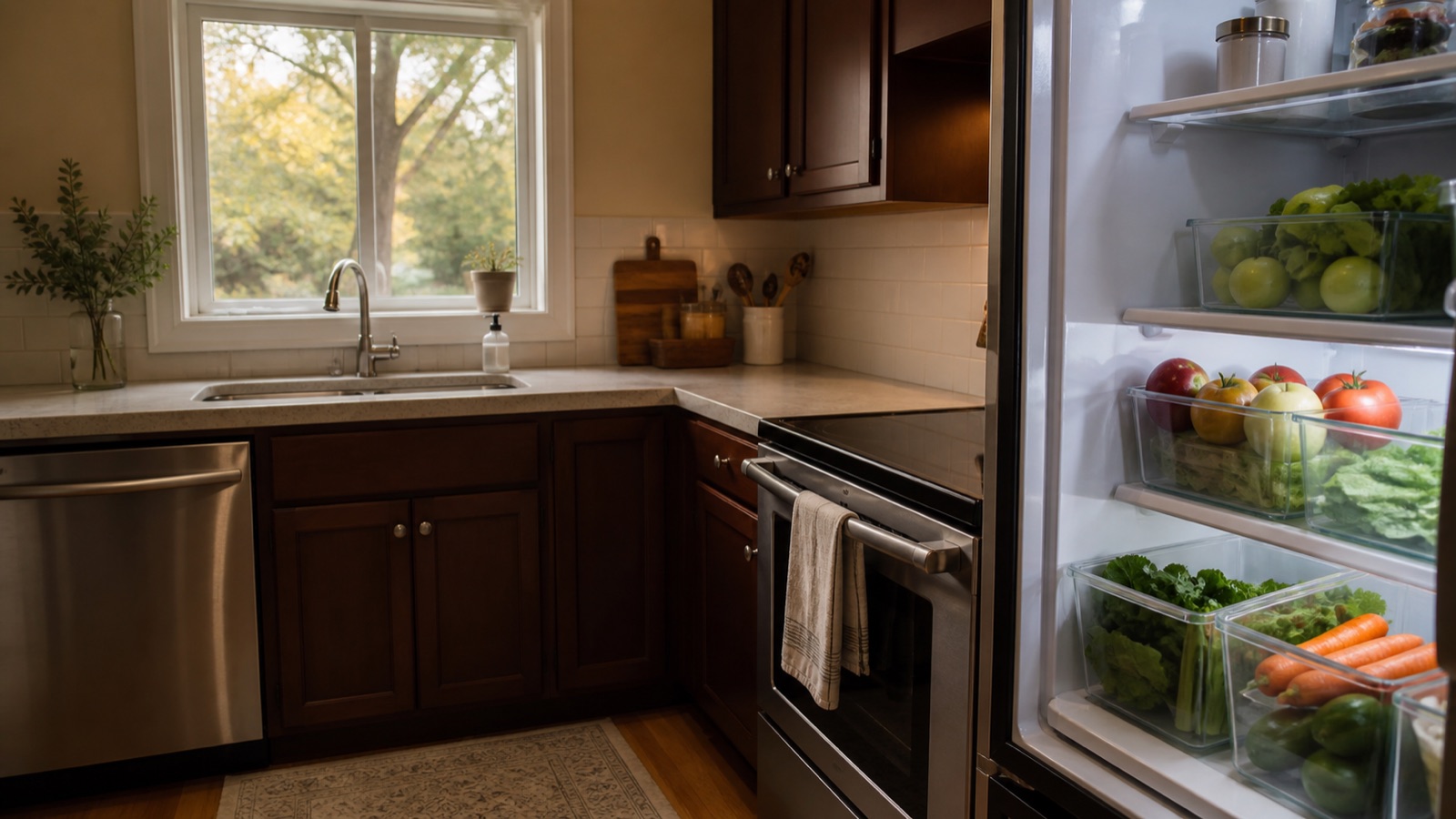
You organized the kitchen a month ago, and it's already sliding: a mug in the pan cabinet, three half-used containers of the same thing, and a counter that's collecting mail again. The advice you'll find is either a cleaning schedule (wipe the fridge shelves, degrease the hood) or a vague "tidy as you go." Neither addresses the real problem in a small kitchen, which is that things stop living where they belong, and there's no slack space to hide the drift.
A reset is different from a clean. It's a short, repeatable pass that puts every zone back to its baseline, and it's the maintenance layer of our small kitchen organizing system. This one takes about 30 minutes once a week, has a 5-minute nightly version, and works only if your kitchen already has zones; if it doesn't, the last sections explain why the routine keeps failing.
Why a reset beats a deep clean
A deep clean scrubs surfaces; a reset restores positions. In a small kitchen the second matters more, because a single misplaced stack of plates blocks the one shelf your pans fit on. Resets are also short enough to survive a busy week. People who stick with a timed weekly reset report that the kitchen never gets bad enough to need a weekend overhaul, which is the whole point.
The routine below assumes you've already done a first-pass declutter and assigned zones. If not, start with the kitchen declutter checklist, then come back.
The 30-minute weekly reset
Pick a fixed slot, ideally the same evening each week and right before grocery day, so you reset into an emptier fridge rather than a full one. Set a timer for each block and move on when it rings.
Step 1: Clear every surface (5 minutes)
Take everything off the counters that isn't a daily-use appliance. Put away, throw out, or relocate; don't reorganize yet. If the same non-kitchen items land here every week (mail, chargers), give them a home outside the kitchen this week rather than moving them again next week. The countertop organization guide covers what earns a permanent spot.
Step 2: Fridge and freezer sweep (5 minutes)
Pull anything expired, wilted, or unidentifiable. Consolidate duplicates, move leftovers to the front at eye level, and wipe one shelf (rotate which one each week). Write the week's leftover count on a sticky note if you tend to forget them; three or more means you're cooking too much or not eating what's there.
Step 3: Put-back by zone (10 minutes)
Walk each zone in order (cooking, cleaning, prep, food storage, serving) and return anything that's wandered. This is where the reset pays off. The mug in the pan cabinet, the spatula in the knife drawer, the cereal above the sink: each goes back in under a minute if you know where it lives.
If you find yourself unsure where something belongs, that item doesn't have a zone yet; note it and decide once the timer's done. The kitchen zone system explains how to assign a home to anything that keeps floating.
Step 4: Container check (5 minutes)
Open the container cabinet. Match orphans, recycle anything cracked, and re-nest what's been stacked wrong. If lids are piled loose again, that's a storage problem, not a discipline problem; the Tupperware lid storage guide shows lid-first layouts, and a matching set from the best stackable containers roundup makes this step a 60-second job because everything only fits one way.
Step 5: Sink and under-sink (5 minutes)
Empty the dish rack, wipe the sink, replace the sponge if it's more than a week old, and glance under the sink for leaks and near-empty bottles. Add anything running low to the grocery list now.
The 5-minute nightly version
The weekly reset only stays at 30 minutes if the kitchen gets a quick nightly close. After the last dish is done:
- Counters wiped and cleared of everything but the daily appliances.
- Dishwasher started or dish rack emptied.
- Trash out if it's more than three-quarters full.
- Anything that wandered in during the day goes back to its zone.
Anchor it to something you already do every night, like starting the dishwasher or setting up tomorrow's coffee. People who attach the close to an existing habit report keeping it far longer than those who rely on remembering.
Monthly add-ons
Once a month, extend the reset by 15 minutes and tackle one of these, rotating through the year:
- Run the freezer down and defrost or reorganize it.
- Pull everything from the under-sink cabinet and check the plumbing. A pull-out from the best under-sink organizers roundup makes this a slide-out-and-look job instead of an unload.
- Wipe cabinet door fronts and handles.
- Re-test one zone: if the same items keep drifting out of it, resize the zone.
When the reset keeps failing
If you're skipping the routine, shorten it. A 15-minute version with just Steps 1, 3, and 5 still holds the system. If you're doing it but the kitchen looks the same afterward, the problem is upstream: too much stuff for the space, or zones that don't match how you cook. Both are fixed by decluttering and re-zoning, not by trying harder.
The reset also doesn't work well in a shared kitchen unless everyone knows the zones. Label shelves for a month; unlabeled zones are the most common reason a roommate kitchen resets itself into chaos by Wednesday.
The one purchase that shortens every reset
Most of the routine is free. The exception is Step 4: mismatched containers turn a 5-minute check into a 20-minute puzzle every single week. A single matching set that stacks and nests, chosen from the best stackable containers roundup, removes that step's variability more than any other item in the kitchen.