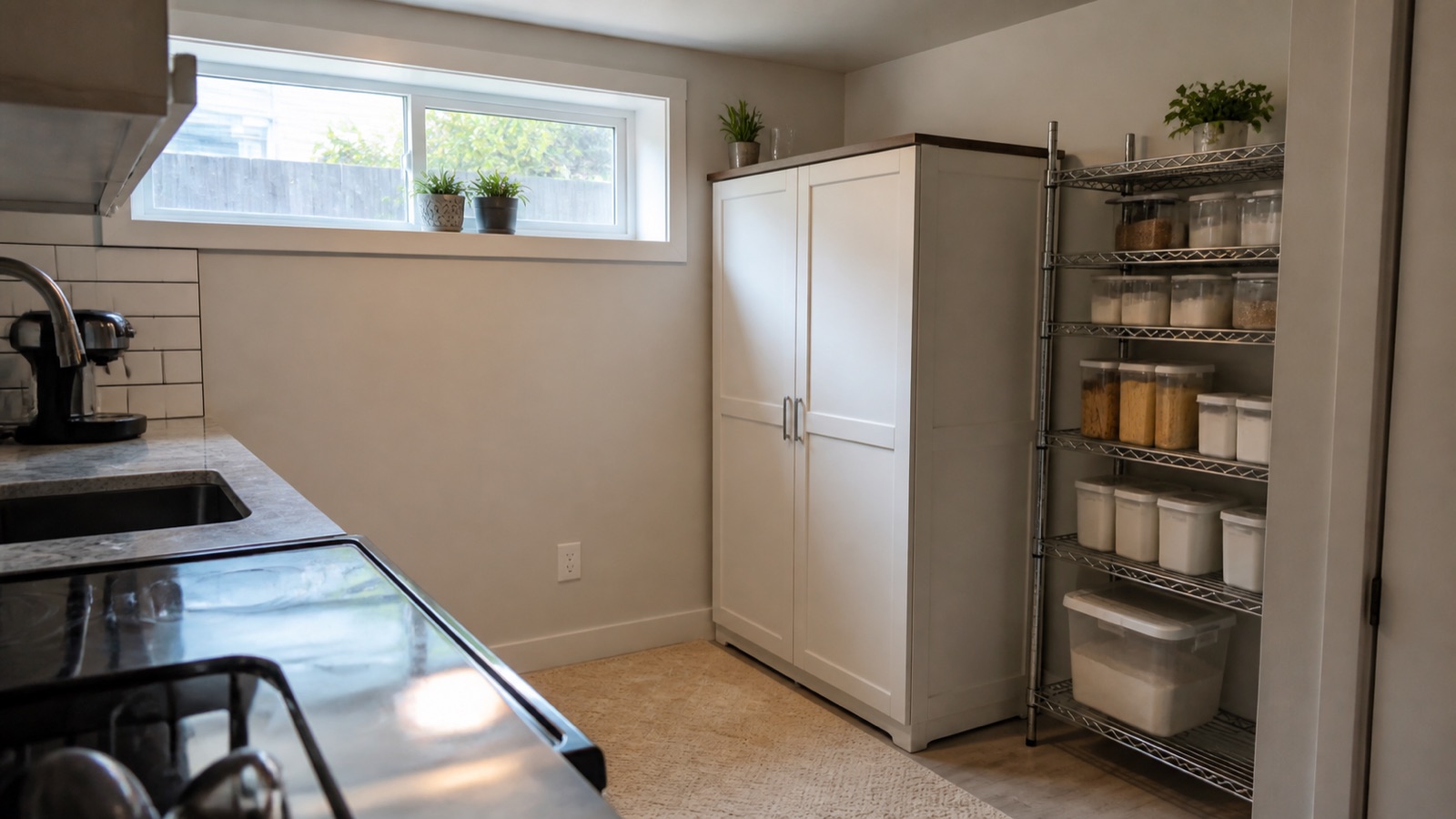
A basement suite kitchen comes with problems the kitchen upstairs never has: a ceiling around 7 feet with ductwork hanging lower than that, walls that are painted concrete or cinder block, air that never quite dries out, and a landlord who lives above your head. Search "basement kitchen storage ideas" and most of what comes back is about storing things in a basement, meaning heavy-duty shelving and seasonal bins, not about cooking in one with a two-burner cooktop and a single base cabinet.
This guide is about the second thing. It covers keeping food dry and pest-free, using walls you cannot drill and adhesives will not stick to, and fitting storage under a 6-foot-10 duct. It uses the no-drill toolkit from our renter-friendly kitchen storage guide, with humidity and pests added as the factors that decide what works down here.
Start With Humidity: Airtight Everything
Basements commonly sit at 60 to 70 percent relative humidity in summer, and at that level cereal goes stale in days, flour clumps, and crackers soften in an open sleeve. Cardboard boxes also absorb moisture and become a home for silverfish. The first purchase for a basement kitchenette is a set of airtight containers and a $10 to $15 hygrometer so you know what you are dealing with. Above 60 percent, a small dehumidifier pays for itself in food that does not get thrown out.
Decant everything dry into containers in the 1 to 2 quart range, square so they stack in the one cabinet or on a cart. Renters consistently report that thin plastic containers get chewed by mice in older basements, so use glass or thick plastic for anything stored near the floor, and keep all food at least a foot off the floor.
Our roundup of the best stackable airtight containers covers which lids actually seal and which sets come with replaceable gaskets, which matters when a gasket swells in damp air.
Concrete and Cinder Block Walls: What Sticks and What Does Not
Adhesive hooks and strips are the standard renter's tool and they fail on basement walls. Painted concrete and cinder block are porous, textured, and slightly damp, and the most common complaint from basement renters is a strip that let go overnight with a shelf of spices on it. Treat the walls as unusable for anything adhesive, and mount nothing to them without written permission, since patching block is not like patching drywall.
What does work is anything that presses or stands. A tension rod between two solid surfaces, such as inside a window well recess or between the end of the cabinet and the wall, holds a shelf for light items. A freestanding wire shelving unit, 14 to 18 inches deep and 4 to 5 feet tall, becomes the pantry and stands on leveling feet, which matter because basement slabs are rarely flat. Chrome wire rusts in damp air within a year or two, so choose black epoxy or powder-coated units and check the listing for the coating.
See our guide to the best tension rod shelves for spans and load limits, and the broader list of no-drill kitchen storage ideas for everything that stands, hangs, or clamps instead of sticking.
Low Ceilings and Ductwork: Storage Under 6 Feet
With ducts at 6 feet 6 inches or lower, the tall pantry cabinet that solves storage upstairs will not fit, and anything above head height becomes a hazard. The useful zone in a basement kitchenette runs from the floor to about 5 feet. A rolling cart 30 to 36 inches tall with three shelves holds the overflow pantry and small appliances and slides under the lowest duct. The top of an apartment-size fridge, which stands 60 to 66 inches, often has a few inches of clearance for a shallow basket.
This works when the cart is narrow enough for the gap beside the fridge or cabinet, usually 12 to 18 inches. It fails on the uneven floors common in older basements, where a cart rolls on its own; locking casters are not optional here. Some renters hang magnetic hooks on exposed steel ductwork for light items like mitts and towels, which holds, but never block a duct's access panel or hang anything heavy from it. Our picks for the best rolling carts for small kitchens include a few under 32 inches tall.
Under the Sink: Pipes, Shut-Offs, and Sometimes a Pump
In many basement suites the sink cabinet is the only base cabinet, and it is crowded with the trap, shut-off valves, sometimes a cleanout, and in suites below the sewer line a small drain pump. A two-tier expandable under-sink organizer with removable shelf panels works around all of that and adds a level for dish soap, sponges, and trash bags. A door-mounted caddy takes the sponge and brush off the sink edge.
This works when you measure the clear space first and buy a unit that adjusts in width and depth. It does not work if you bury the pump or the shut-off; leave both reachable, because a pump failure in a basement is an emergency you want to get to in seconds. Put a shallow leak tray under everything, since condensation on cold pipes drips in humid months. Our guide to the best under-sink organizers flags which models remove panels for pipes.
Doors You Can Use: Entry, Bathroom, and Closet
A basement suite usually has three doors: the entry, the bathroom, and a closet or utility door. The entry door is often a fire-rated or exterior door, thicker than the 1 3/8-inch hooks on most over-the-door racks and sometimes protected by lease terms about egress hardware, so check both before hanging anything there. The bathroom door takes a slim rack for cleaning supplies, and the closet door takes a full pantry rack with 5 or 6 baskets.
This works when the door clears the rack while closing and the hooks fit the door thickness; exterior doors need hooks rated for 1 3/4 inches or more. It fails on hollow-core doors loaded with cans, which bow the door over time. The best over-the-door organizers for a basement are metal basket models with a coating that will not rust in damp air.
Pest-Proof by Design
Mice, silverfish, and centipedes are a fact of basement living, and the kitchenette is where they head. Design the storage so there is nothing for them: no cardboard, no open bags, no food on the floor, and no crumbs in a cart basket. Sealed metal or glass beats plastic for anything long-term. Check the gap under the entry door and around pipe penetrations, and fill them with steel wool and caulk, which most landlords will approve because it protects their building.
Renters consistently report that the single change that ended a mouse problem was moving all food into sealed containers at least 12 inches off the floor. Everything else in this guide is built around that.
Light and Layout: Make the Kitchenette Feel Bigger
Basement windows are small, so storage should not add to the gloom. Clear containers, light-colored bins, one open shelf instead of three, and a clear counter go a long way. Keep the fridge top and the cart top tidy, because in a 7-foot room the tops of things are at eye level.
For the layout side of a one-wall kitchenette, our guide to studio apartment kitchenette storage covers zones and counter space. For a basement, start with the containers and the wire shelving, because those two purchases solve the humidity, the pests, and the walls in one trip.