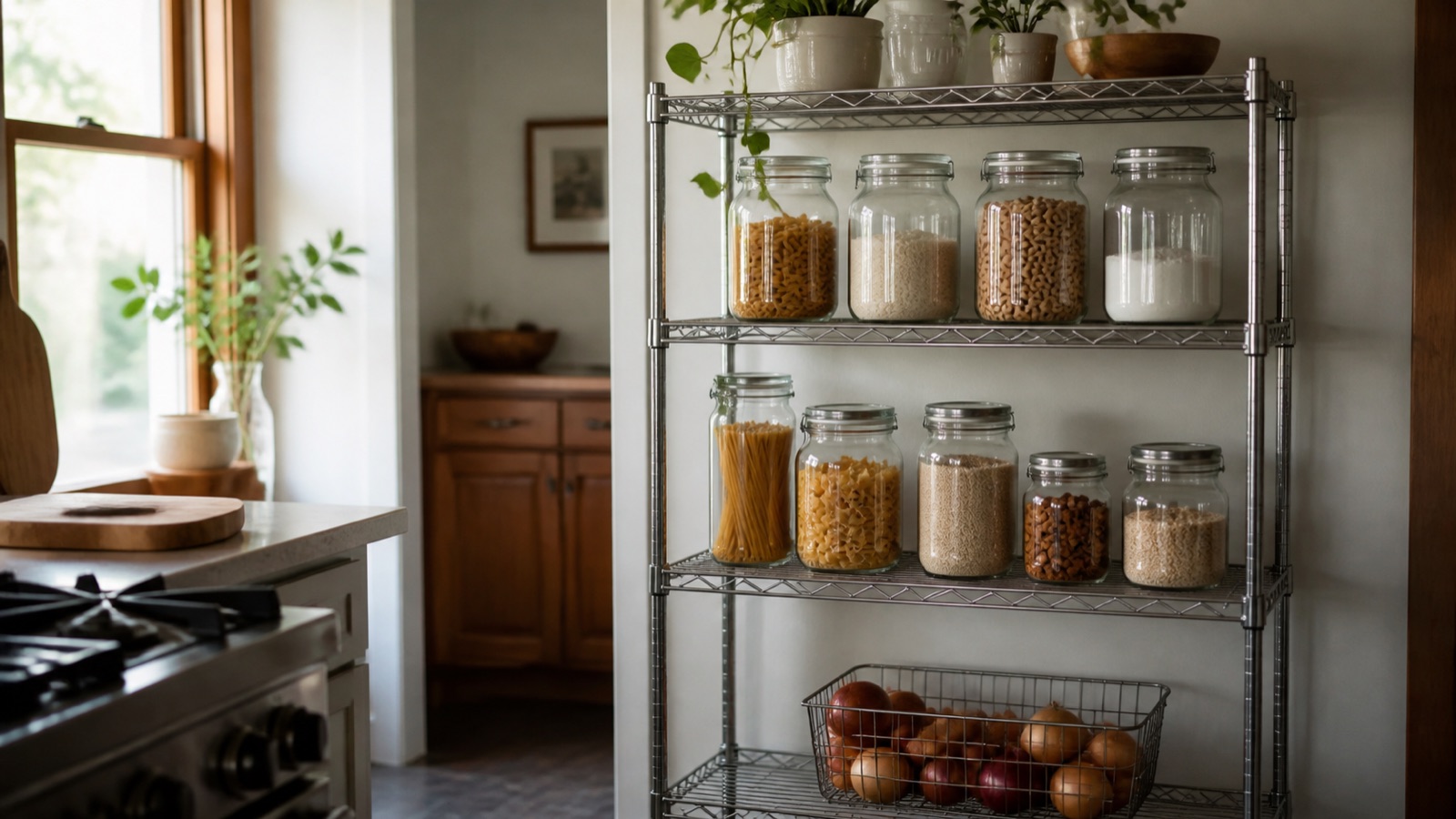
Your kitchen has no pantry, so dry goods are living in a mix of grocery bags on the floor, the cabinet above the fridge, and whatever shelf the dishes left empty. Most "pantry organization" advice starts with labeling your pantry shelves, which assumes you have shelves to label. If you rent, you also can't fix the problem the way homeowners do, by adding a built-in or screwing shelving into the wall. The no pantry storage ideas below are grouped by what you actually have to work with, and every one of them stays inside the deposit-safe rules from our renter-friendly kitchen storage guide.
Convert one cabinet into a dedicated pantry cabinet
The cheapest pantry is a cabinet you already own. Pick the deepest one closest to where you prep, usually a 30-inch upper or a full-height base cabinet, and empty it completely. Move the dishes and mugs it held to the cabinet nearest the sink or dishwasher, which is where they belong anyway.
Then fix the two things that make a cabinet a poor pantry: wasted vertical space and a back you can't see. A shelf riser splits a 12- to 14-inch-tall shelf into two usable layers for cans and jars, and a 9- to 12-inch lazy susan turns the back corner into something you can spin toward you. Both typically run under $30 apiece and need no installation.
This works when you have at least one cabinet 12 inches deep or more and can spare it. It doesn't work when your only cabinets are the shallow uppers, already full, or when the kitchen has two cabinets total. In that case, skip ahead to the rolling cart and freestanding options; even the best shelf risers can only divide space that already exists.
Decant staples into stackable containers
Cereal boxes, half-used bags of flour, and open pasta boxes waste a surprising amount of a small cabinet, because none of them stack and none of them seal. Moving your staples into square or rectangular airtight containers usually recovers about a third of the shelf, simply because square shapes pack edge to edge and stack two or three high. Renters consistently report that this switch is what finally made a single cabinet feel like a pantry.
Start with the five or six things you buy every week, not the entire cabinet. A basic set of eight to ten containers in mixed sizes typically lands in the $25 to $50 range; buy one set, live with it for a month, then add the sizes you actually ran out of. Label the lid or the front, and write the cook time or water ratio on the label for rice and grains so you can recycle the box.
The limit is height. Tall 2- to 3-quart canisters are great for flour and rice but won't fit under the middle shelf of a standard upper cabinet, so check the listing for current dimensions against the shelf clearance you measured. If you want to compare sizes and lid styles before buying, our roundup of the best stackable food storage containers sorts them by cabinet fit.
Use a rolling cart as a freestanding pantry
A three-tier rolling cart is the most common answer renters give when asked how they solved the no-pantry problem, and for good reason: it needs no installation, holds somewhere around 40 to 60 pounds across three tiers, and rolls out of the way when you need the floor. The footprint is roughly 13 to 18 inches wide by 14 to 17 inches deep, which fits the dead space beside most refrigerators or at the end of a run of cabinets.
Load it by weight: canned goods and jars on the bottom tier, boxed goods and containers in the middle, snacks and bread on top where they won't get crushed. If you want a tidier look, a few fabric or clear plastic bins sized to the tier hide the open-shelf clutter. Look for carts with metal mesh tiers rather than plastic if you're storing cans, and check the listing for the per-tier weight rating.
Where a cart fails is deep, heavy stock. If you buy in bulk from a warehouse club, a lightweight cart will bow at the middle tier and rattle every time it moves, so favor steel over plastic and keep the heaviest items low. Under $40 buys a decent one; the sturdier steel models tend to sit in the $40 to $70 range.
Hang a pantry rack on the back of a door
If your kitchen has a door, or there's a hall closet or laundry door within a few steps, the back of that door is roughly 6 square feet of storage nobody is using. An over-the-door pantry rack with five to eight baskets holds spices, packets, oils, canned goods, and snacks, and it hooks over the top of the door with no screws.
Two measurements decide whether this works. First, the gap above the door: most hooks need about half an inch of clearance to slide over, and a door that already rubs the frame will stick or stop closing. Second, basket depth: shallow 3- to 4-inch baskets suit spice jars and packets, while standard cans need about 4.5 inches or more. The most common complaint in reviews is that the rack rattles or swings on a hollow-core door, which a strip of adhesive felt behind the hooks usually fixes.
Skip this on cabinet doors unless the rack is explicitly sized for them; kitchen cabinet doors are thinner and lighter than passage doors, and a loaded rack pulls the hinges out of alignment. For the full breakdown of which racks fit which doors, see the best over-the-door organizers and racks.
Add a freestanding shelf or slim pantry cabinet
When you have a spare wall but no cabinets to spare, a freestanding unit is the only thing that gives you real pantry volume. There are two shapes worth considering. A slim rolling pantry, 5 to 10 inches wide and 40 to 50 inches tall, slides into the gap between the fridge and the wall and holds two or three rows of cans, jars, and bottles. A basic metal utility shelf, 30 to 36 inches wide and 12 to 14 inches deep, holds far more but needs a full wall section.
Pros
- Real pantry volume without touching the walls
- Moves with you to the next apartment
- Slim units fit gaps as narrow as 5 inches
Cons
- Tall units should be tip-restrained, which may mean one screw
- Open shelving shows every box and bag
- Takes floor space a tiny kitchen may not have
Read the tip-over guidance before you buy. Anything over about 48 inches tall is normally sold with an anti-tip strap, and using it means one small screw hole in the wall. Most landlords treat a single filled screw hole like a picture nail, but ask first, and stick to shorter units if the answer is no. The no-drill kitchen storage ideas guide covers what usually counts as damage under a lease and what doesn't.
Claim the top of the fridge and the space above the cabinets
The top of the refrigerator is a shelf; the mistake is treating it like a pile. Two or three open-front bins with handles, around 10 to 12 inches wide, let you pull down a whole category at once instead of reaching blindly for a bag of chips. Bread, chips, crackers, and cereal are good candidates because they are light and you use them often.
Keep chocolate, oils, and anything that melts or turns rancid off the fridge top, because the compressor pushes warm air up there all day. The gap above your upper cabinets, if there is one, follows the same rules: lightweight baskets, backup stock only, and nothing you need to reach every day. Both spots collect a film of kitchen grease, so wipe the bins down when you rotate stock.
Store produce and snacks where they'll actually last
An improvised pantry fails first on produce. Onions and potatoes need airflow and darkness, and a sealed bin inside a warm cabinet next to the stove turns them soft within a week. A hanging mesh basket, a ventilated bin on the bottom tier of your cart, or a basket on the floor of a closet all work better; our guide to storing onions and potatoes in a small kitchen goes through the options by kitchen temperature.
Snacks are the other category that overruns a pantry-less kitchen, because they arrive in bulky bags and multiply. One bin per person, or one bin per category, on the cart or the fridge top keeps them from taking over a cabinet you needed for staples. The snack storage and organization ideas guide covers portioning and kid-reachable setups.
Where to start if you're buying one thing
If you have a cabinet to spare, start with containers: they make the space you already have work harder, and they move with you to every future kitchen. If you don't, a three-tier cart gives you the most pantry per dollar and per square foot, and our guide to the best rolling carts for small kitchens flags which ones hold up under a full load of cans. Measure the spot first, then compare current dimensions and weight ratings in the listings before you order.