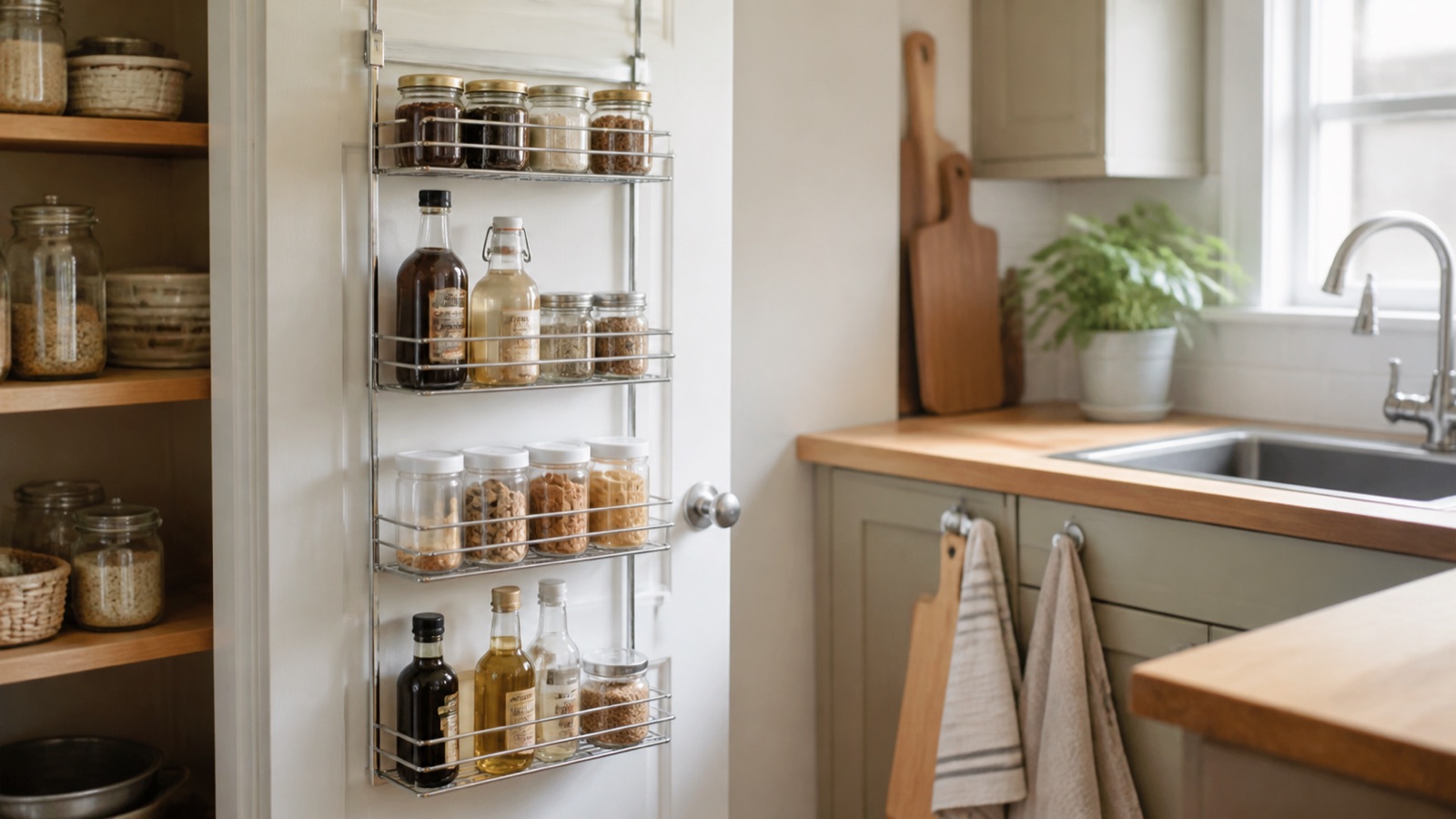
Every door in a small kitchen is 20 square feet of storage that nobody is using: the pantry door, the cabinet doors, the door to the hall, and the closet door in the apartment where the mop lives. Over the door kitchen storage is the fastest no-drill fix there is, but the racks that arrive do not always fit. The hooks are too thick for the door to close, the basket hits the shelf inside, or the whole thing swings and bangs every time the door opens.
This is the door chapter of our small kitchen storage by zone guide, and it starts with the door itself, because door thickness, hinge clearance and what is on the other side decide which rack will work before you ever look at a product. Each setup below lists the door it fits and the one it does not.
Check the door before you buy a rack
Measure the door thickness at the top edge. Interior doors in US homes are almost always 1 3/8 inches thick, exterior and some older doors are 1 3/4 inches, and cabinet doors are 3/4 inch, and over-the-door hooks are sized for one of those, not all three. Then look at the gap between the top of the door and the frame when it is closed. A standard over-the-door hook is about 1/8 to 3/16 inch thick, and if the door already scrapes the frame, the hook will keep it from closing at all.
Check the swing. A rack that sticks out 4 to 6 inches will hit a shelf, a wall or a counter if the door opens against one, and a rack on a door that opens into a narrow galley will be in your way every time you pass. Finally, check what is on the other side of the door. Hollow-core doors with a pantry shelf 2 inches behind them do not have room for a rack that hangs on the inside face.
- ADoor thickness at the top edge — hooks are sized for one thickness, not all of them
- BGap between the door top and the frame when closed; the hook has to fit in it or the door will not shut
- CHow far the rack projects vs. what sits behind the door — a close shelf leaves no room
The full-height pantry door rack
A six-to-eight basket rack that hangs on the pantry or closet door is the classic move, and it turns a door into a spice, can and snack wall. Racks in the 18 to 22 inch wide and 60 to 70 inch tall range hold 20 to 40 pounds spread across the baskets, and most cost $25 to $50. In a kitchen with no pantry at all, the same rack on a hall closet door becomes the pantry, which is the setup people in no-pantry apartments most often report as their best purchase.
It works on a hinged, solid-core or hollow-core door at least 24 inches wide with a clear shelf-free zone behind it. It does not work on bifold or sliding pantry doors, which have no top edge to hang from and cannot carry the weight, and it does not work on a door that opens outward into a walkway, because the loaded rack swings with it. Cans are the usual failure point, since a basket of ten 15-ounce cans is nearly 10 pounds on its own and bends the thin wire in cheaper racks. Our roundup of the best over-the-door racks sorts them by basket depth and rated load, and our guide to where to put food when you have no pantry shows the closet-door setup in full.
Cabinet door caddies for the sink and stove cabinets
Cabinet doors are 3/4 inch thick, so the hooks on a pantry rack will not fit them, and you need a caddy made for cabinet doors. These are 8 to 12 inches wide, 4 to 6 inches deep and hang over the top of the door to hold a sponge and brush under the sink, or foil and wrap boxes next to the stove. They cost under $20 and need no tools.
They work on frameless cabinets, where the door sits in front of the box and the caddy has room to hang, and on face-frame cabinets only if the shelf inside sits back at least 3 inches from the door. They do not work on inset doors that close flush inside the frame, because there is no gap for the hook. The under-sink cabinet is the best first spot for one, and our under-sink organization guide shows how the door caddy pairs with the shelf organizer around the pipes.
Clear pocket organizers for spices, wraps and snacks
A clear pocket organizer, the kind sold for shoes, is a 20-pocket door rack for under $15 that holds spice jars, tea boxes, snack bags and the loose packets that fill a junk drawer. Pockets are usually 4 to 5 inches wide and 6 to 7 inches deep, which is the right size for a standard 4-ounce spice jar or a foil roll. You can see everything at once, which is the whole point.
The limit is weight. Fabric pockets sag under glass jars, so keep the heavy items in the bottom rows and the light ones up top, and expect the whole organizer to carry 10 to 15 pounds at most. Reviewers also note that the pocket rows are too close for tall bottles, so olive oil and vinegar stay in the cabinet. Our spice storage guide for small kitchens compares the pocket organizer with door-mounted racks and drawer tiers.
Hooks and bars for the back of the kitchen door
The room door itself is the best place for the flat, awkward things: aprons, reusable bags, a folding step stool, a broom or a dish drying mat. An over-the-door hook rail with 5 or 6 hooks holds 15 to 20 pounds and costs under $15, and a single towel bar on the inside of a closet door holds the mop and the dustpan. This keeps the cleaning gear out of the under-sink cabinet entirely.
It works on any 1 3/8-inch interior door with 1/4 inch of top clearance. It fails when the door opens into the kitchen and the hooks face the room, because everything hanging on them swings into the walkway, so put the rail on the side that faces a wall when the door is open. Our guide to cleaning supplies storage in a small kitchen covers which of these items belong on the door and which belong in a caddy.
Protect the door and the deposit
Over-the-door hardware can scuff paint and dent hollow doors under load, and the swing of a heavy rack will wear a groove on the top edge over a year. Stick a strip of felt or a 1/16-inch foam pad under each hook, add a small adhesive bumper on the wall side so the rack does not bang, and keep each basket under 5 pounds. That is enough to leave no mark at move-out, which is the entire reason renters choose these racks over screws.
If the door cannot take a rack, adhesive hooks rated for 3 to 5 pounds on the inside face handle a dish towel or a light bag, and they peel off cleanly. Our no-drill kitchen storage guide covers the adhesive, tension and freestanding options that fill in where a door rack will not fit.
Pick the rack for the door you actually have
A hinged pantry or closet door takes a full-height basket rack, a cabinet door takes a small caddy, and the room door takes hooks, and a rack sized for one will not fit the other. Measure the thickness and the top gap, decide what the door swings into, and then choose. Our best over-the-door racks roundup lists the hook size and rated load for each so you can match one to your door in a single order.