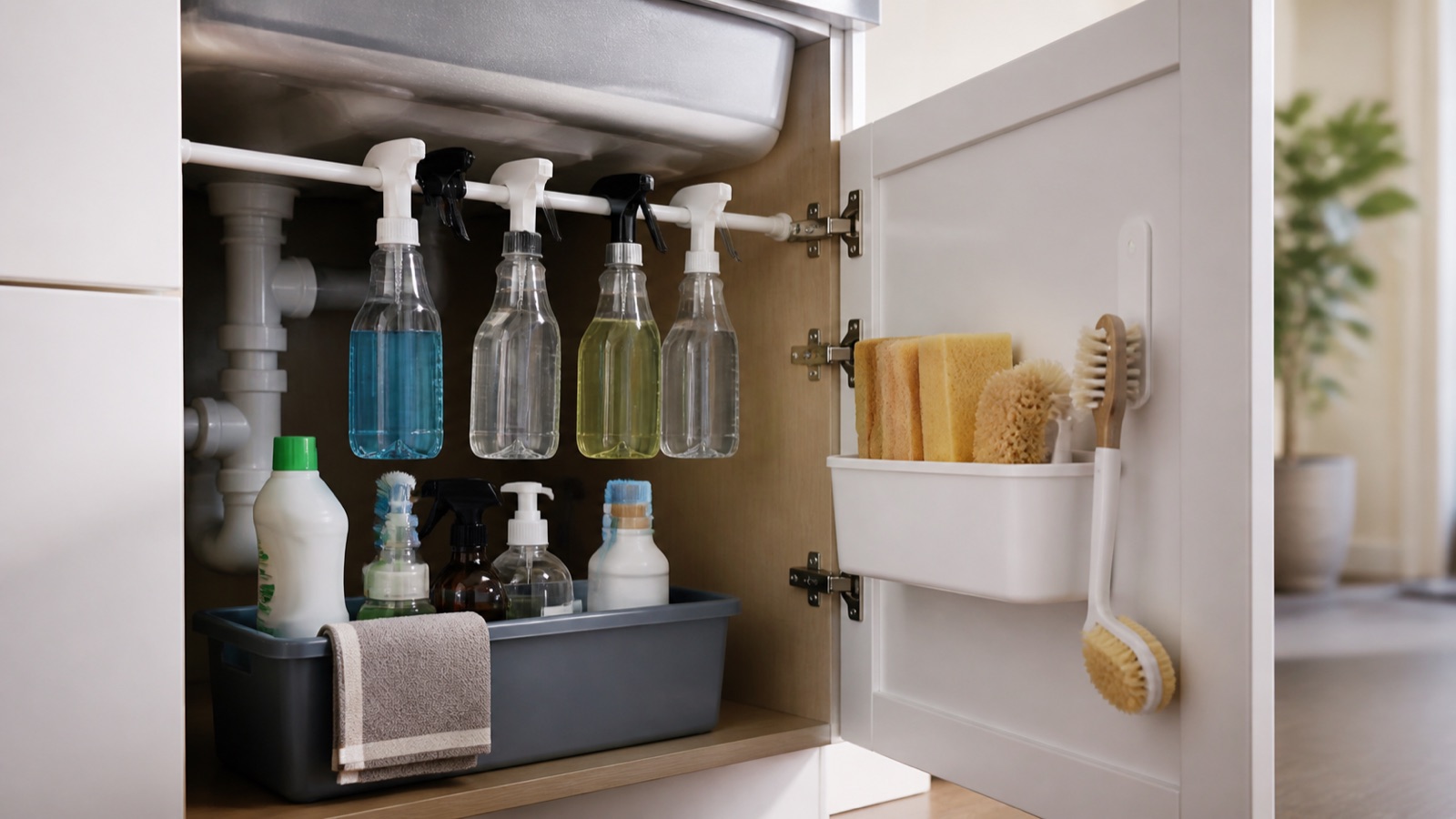
Cleaning supplies end up under the kitchen sink by default, and that is the worst-shaped cabinet in the house. A P-trap drops through the middle, the shut-off valves and supply lines take the back corners, and if you have a garbage disposal it claims a third of the width. Spray bottles stand loose on the cabinet floor, so pulling one out knocks two more over, and the whole cabinet is at floor level where a toddler or a dog can reach it.
Search results for cleaning supplies storage ideas mostly show a walk-in pantry with matching labeled bins, which does not help when your entire storage zone is 30 inches wide with a pipe in the middle. This piece is part of our what goes where guide to storing everything in a small kitchen, and it covers six ways to store cleaning supplies in a small kitchen, with the cabinet measurements and door limits that decide which one fits.
Decide what belongs in the kitchen at all
A small kitchen only needs the supplies used in the kitchen: dish soap, one all-purpose spray, sponges or a brush, dishwasher tabs, trash bags, and a couple of microfiber cloths. That is six to eight items. Bathroom and floor cleaners belong in the bathroom or a hallway closet, and the three half-empty bottles of the same spray get combined into one.
The most common complaint in under-sink organizer reviews is not that the organizer failed but that it filled up on day one. Cutting the collection to the kitchen set is what makes any of the hardware below work.
Two-tier expandable under-sink organizer
An expandable two-tier organizer is the standard answer for a reason. Most are 11 to 15 inches tall, expand from about 18 to 30 inches wide, and have removable shelf panels so the frame straddles the P-trap. Sprays and tall bottles stand on the cabinet floor under the frame, and sponges, tabs, and cloths go on the upper tier. Prices run $20 to $40.
Before you buy, measure three things: the interior width between the cabinet sides, the height from the cabinet floor to the bottom of the trap, and the depth to the back wall. This works when the interior is at least 16 inches wide and the trap sits 8 inches or more above the cabinet floor. It does not work when a garbage disposal fills half the cabinet, when a water filter tank sits on the floor, or when the supply lines run along the floor instead of the back wall. Check the listing for current dimensions, since adjustable models differ in how low the upper shelf can sit.
Our roundup of the best under-sink organizers for small kitchens sorts them by minimum width and trap clearance, and the under-sink organization guide walks through measuring a cabinet with a disposal in it.
Tension rod for spray bottles
A tension rod across the cabinet 12 to 14 inches off the floor turns spray bottles into hanging bottles. Hook each trigger over the rod, and the space under the bottles stays open for a bin. A 24-inch rod holds five to seven standard 16- to 24-ounce bottles, and rods in this size cost $8 to $15.
This works when the cabinet sides are solid enough to hold a rod under tension and the trap does not cross the spot where the rod needs to go. It does not work with 32-ounce bottles, which together exceed the roughly 10 pounds most small rods are rated for, and it does not work in cabinets with thin particleboard sides that dent or bow. Our guide to tension rod shelves for renters covers rod ratings and the rubber caps that keep a rod from sliding on painted cabinet walls.
Cabinet-door caddy
The inside of the sink cabinet door is the best spot for the things you grab wet: sponges, a dish brush, gloves, and a roll of trash bags. A hang-over-the-door caddy needs no screws and holds about 5 pounds. Screw-in versions hold more but need a door at least three-quarters of an inch thick so the screws do not come through.
Two things stop this from working. The caddy must clear the sink basin and the cabinet's face frame when the door closes, so measure the gap between the closed door and the basin, which is often only 2 to 3 inches. And European-style concealed hinges leave less room at the top edge for a hang-over hook than older exposed hinges, so check the hook thickness against the gap. Our picks for the best over-the-door organizers and racks note which ones are shallow enough for a sink cabinet door.
A portable caddy for the daily set
A plastic caddy with a handle holds the daily kitchen set in one grab: spray, cloth, sponge, and brush. It lives on the cabinet floor under the organizer and travels to the bathroom when the same spray gets used there. A basic caddy costs under $15.
Choose a caddy shorter than the space under the trap, usually 8 inches or less, and keep it to the daily set rather than every bottle you own. Home cooks consistently report that a caddy with more than six items stops being carried and becomes another bin.
When the sink cabinet is full
If the disposal and filter leave no room, move the cleaning supplies out of the kitchen. A slim three-tier rolling cart 12 to 17 inches wide fits in a hallway closet or laundry nook and holds every spray, cloth, and refill in one place. Our roundup of the best rolling carts for small kitchens lists a few that are narrow enough for a closet.
Bulk paper towels, spare sponges, and other light items can go in a basket on top of the refrigerator. Keep chemicals off the fridge top, since the spot is warm and hard to reach in a hurry, and use a basket with a lip so nothing slides off when you pull it down.
Kids, pets, leaks, and chemicals
A childproof cabinet latch costs $5 to $10 and takes ten minutes to install, and it is worth doing even with older kids if a dog is in the house. Keep chemicals in a separate cabinet from food, never share a shelf with dishes, and store bleach and drain cleaner upright with the caps tight.
Under-sink leaks are the reason reviewers photograph ruined cardboard boxes and rusted organizers. A silicone mat or a shallow plastic tray on the cabinet floor catches drips before they soak everything, and it makes a slow leak visible before it becomes a repair.
Where to go next
Start with the measurements above, then use the under-sink organizer roundup to pick a frame that clears your trap. If the trash bin is fighting for the same cabinet, our trash and recycling guide for small kitchens covers which of the two should win the space under the sink.